Shopping Through Time: How Wroclaw's Retail Spaces Became Living Museums of Polish History
Most people don't think of a shopping trip as a history lesson. But in Wroclaw, Poland, that's exactly what you get — whether you're hunting for discounted designer goods or scoping out commercial real estate opportunities. The city's retail landscape is essentially a layered archaeological site, where each era of construction tells you something different about who Wroclaw was, who it is, and where it's heading.
For American visitors used to the clean, homogenous aesthetic of a US outlet mall, Wroclaw is a genuinely surprising place. And for US investors eyeing Central European commercial real estate? Understanding what these buildings mean is just as important as understanding what they're worth.
The Ghosts of Socialism: Department Stores That Refused to Die
Let's start with the big, boxy elephants in the room.
If you wander through central Wroclaw, you'll notice a handful of large, utilitarian structures that feel architecturally out of step with everything around them. These are the remnants of Poland's communist-era retail system — state-run department stores built between the 1950s and 1980s under a philosophy that prioritized function over form, access over aspiration.
The most iconic of these is the former Feniks department store on Świdnicka Street, a building with a history that stretches back even further than the communist period. Originally constructed in the early 20th century under German rule (Wroclaw was called Breslau then), it was rebuilt and repurposed multiple times across different political regimes. Today, parts of the structure have been folded into modern retail use, but the bones of the building still carry that mid-century weight — wide corridors, high ceilings, a certain no-nonsense grandeur.
Local architect Marta Kowalczyk, who has worked on several adaptive reuse projects in the city, describes these spaces as "uncomfortable but necessary reminders." She explains that many Wroclaw residents feel ambivalent about the socialist-era buildings — there's nostalgia, certainly, but also a recognition that they represented a system that limited both personal freedom and commercial creativity. "You can't just tear them all down," she says. "They're part of the story. But you also can't leave them exactly as they were."
For US visitors, these structures offer a fascinating contrast to anything back home. They're the retail equivalent of a Cold War documentary — tangible, walkable, and far more interesting than a textbook.
The 1990s Pivot: When Wroclaw Discovered the Shopping Mall
After 1989 and the fall of communism, Poland went through an almost giddy period of commercial reinvention. Western brands flooded in. Entrepreneurs who'd spent decades operating in gray markets suddenly had legal, legitimate pathways to build businesses. And developers — both local and foreign — rushed to fill the demand for modern retail space.
Wroclaw's first wave of post-communist shopping centers arrived in the 1990s and early 2000s. Some of them, frankly, weren't pretty. Rapid construction, limited architectural oversight, and a sheer hunger for anything that felt modern produced a generation of malls that were functional but forgettable. Think strip-mall energy, but European-sized.
But here's the thing: even those early, clunky retail centers represented something genuinely radical for Polish consumers. Choice. Abundance. The ability to walk into a store and actually buy what you wanted, at a price set by the market rather than the state.
Karol Wiśniewski, who opened one of Wroclaw's first private clothing boutiques in 1993, remembers the atmosphere vividly. "People would come in just to look," he says. "Not always to buy. Just to see that it was possible." His shop, now a well-established multi-brand retailer in the city center, has since moved three times — each location reflecting a different chapter in Wroclaw's commercial evolution.
The Modern Era: Where Architecture Becomes a Brand Statement
Fast-forward to the 2010s and beyond, and Wroclaw's retail architecture has entered a completely different phase. The city is now home to some genuinely striking commercial developments — spaces that could hold their own against anything you'd find in Berlin, Vienna, or Warsaw.
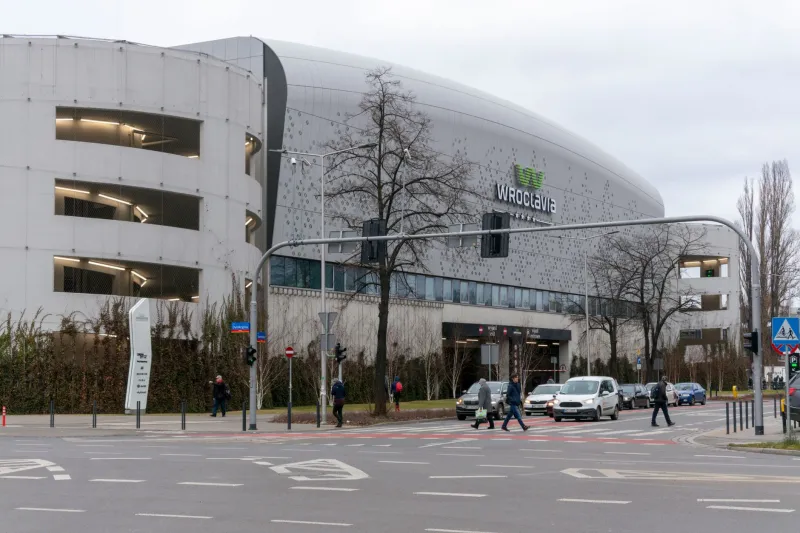
Magnolia Park, one of the largest shopping centers in Lower Silesia, is a prime example of how Polish retail has matured. It's not just a place to shop; it's a destination, complete with dining, entertainment, and design elements that make it worth visiting even if you're not buying anything. The architecture is intentional, the lighting is considered, and the tenant mix reflects an increasingly sophisticated consumer base.
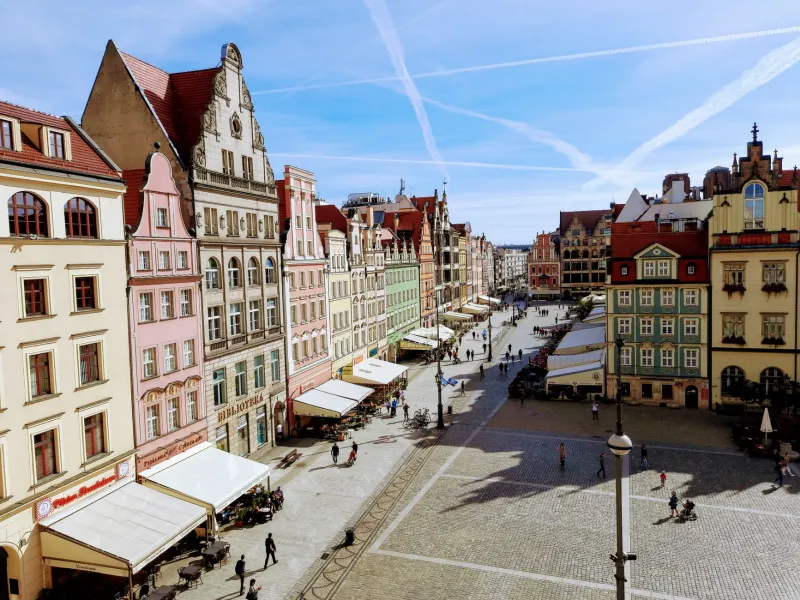
But it's the smaller, independent spaces that really capture the current moment in Wroclaw retail. The city's historic market square — the Rynek, one of the largest medieval market squares in Europe — has become a showcase for boutique retail done right. Narrow townhouses that once housed merchants centuries ago now shelter concept stores, artisan workshops, and specialty food shops, all operating under the Instagram-era imperative to be visually compelling as well as commercially viable.
For US shoppers, this is where Wroclaw starts to feel genuinely exciting. These aren't just pretty storefronts — they're the result of property owners, architects, and entrepreneurs collaborating to create retail experiences that feel rooted in place rather than imported wholesale from a global template.
What the Architecture Tells Investors
If you're approaching Wroclaw from a commercial real estate angle, reading the city's architectural history isn't just interesting — it's strategically useful.
The survival and reinvention of socialist-era buildings tells you something about the regulatory environment and the city's willingness to preserve rather than demolish. The 1990s mall boom, and its mixed results, tells you something about the risks of building for short-term demand without long-term vision. And the current wave of boutique, experience-focused retail tells you that Wroclaw's consumer base has grown more discerning and more willing to spend on quality.
Taken together, the retail architecture of Wroclaw maps a city that has absorbed enormous change without losing its identity — which is, arguably, exactly the kind of market where smart commercial investment tends to pay off.
A City Worth Walking Slowly
Here's the thing about Wroclaw that doesn't come through in the numbers or the development reports: it rewards slowness. The best way to understand what's happened to this city's retail landscape is to walk it, block by block, and let the buildings tell you their stories.
From the austere facades of communist-era commerce to the carefully curated window displays of today's boutiques, every storefront in Wroclaw is a data point in a larger narrative about transformation, resilience, and the very human desire to buy, sell, and build something worth having.
Whether you're here to shop, to invest, or just to understand what Central Europe looks like in the 21st century, Wroclaw's commercial spaces are worth your full attention. Bring comfortable shoes and a little patience. The history is right there on the walls — you just have to look.