Wroclaw's Warehouse Goldmine: Why Smart US Retailers Are Stashing Inventory Here Instead of Frankfurt or Amsterdam
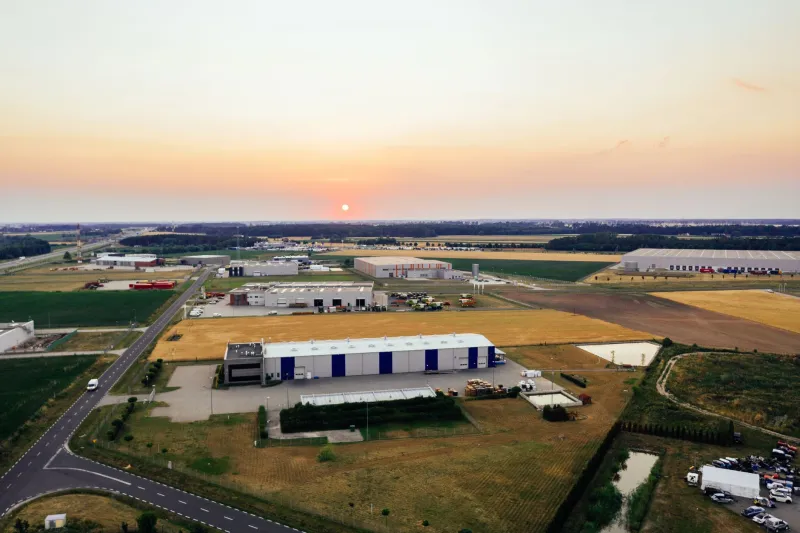
For years, the default playbook for American brands entering the European market looked something like this: land your goods in Rotterdam or Hamburg, park inventory in a pricey Dutch or German logistics park, and absorb the overhead as the cost of doing business abroad. It worked — but barely. Margins got squeezed, lease costs ballooned, and the whole operation felt like running uphill.
Then a handful of scrappy US operators started asking a different question: what if the map was drawn wrong all along?
Wroclaw — the vibrant, historic city in southwestern Poland that most Americans still can't confidently pronounce (it's Vrots-wahv, for the record) — has quietly emerged as one of the most compelling inventory staging grounds in all of Europe. And the retailers who figured this out early? They're sitting on a serious competitive advantage.
The Geography Argument Nobody's Making Loudly Enough
Pull up a map of Central Europe and drop a pin on Wroclaw. What you'll notice immediately is how central it actually is — not just within Poland, but across the entire continent. The city sits within roughly 350 kilometers of both Prague and Berlin, and within a day's drive of Warsaw, Vienna, and Budapest. That's a combined consumer market of hundreds of millions of people, all reachable from a single distribution point.
Wroclaw connects to major European highway corridors through the A4 motorway, which runs east-west across southern Poland and links directly into the German autobahn network. Rail freight connections are solid and improving. And Wroclaw's Copernicus Airport, while not a mega-hub, handles cargo shipments and has seen consistent infrastructure investment over the past decade.
Compare that geographic footprint to, say, a logistics park outside Amsterdam, and the question starts to shift from why Wroclaw to why not Wroclaw.
The Numbers That Make CFOs Smile
Here's where the conversation gets genuinely interesting for anyone running a P&L. Warehouse and logistics space in Wroclaw's commercial zones — particularly in the areas surrounding the Bielany Wrocławskie logistics corridor and the special economic zones near the city's industrial perimeter — runs significantly cheaper than comparable Grade A facilities in Western European markets.
While prime industrial rents in Amsterdam's logistics belt can push above €80–90 per square meter annually, and Frankfurt's surrounding region isn't far behind, Wroclaw's market has historically offered quality modern warehouse space in a range that can be 40–60% lower, depending on lease terms, spec, and location within the region. Those aren't rounding errors — that's the difference between a profitable European operation and one that's constantly bleeding cash.
Labor costs tell a similar story. Poland's logistics and warehouse workforce is skilled, increasingly multilingual, and compensated at rates that remain well below Western European equivalents. For operations that require significant pick-and-pack activity, returns processing, or light kitting — the kind of value-added work that e-commerce brands live and die by — this matters enormously.
What US Operators Are Actually Saying
Talk to American business owners who've relocated inventory operations to the Wroclaw region and a few consistent themes emerge.
"We were paying a fortune to warehouse product in the Netherlands," says one founder of a mid-sized outdoor apparel brand that sells across the EU. "Our 3PL there was fine, but the rates kept climbing every renewal cycle. When we started modeling out a Polish hub, the savings were almost embarrassing. We moved 70% of our European inventory to a facility outside Wroclaw two years ago and we've cut our per-unit fulfillment cost for EU orders by about a third."
Another operator — running a direct-to-consumer kitchenware brand with strong sales in Germany, Austria, and the Czech Republic — describes Wroclaw as a "geographic sweet spot" that nobody on his original logistics team had even suggested. "Our consultant in the US had us focused entirely on German logistics parks. It wasn't until we hired a European freight forwarder who actually knew Central Europe that Wroclaw came up. Now I'm annoyed we didn't do it sooner."
The transshipment angle is worth unpacking here, too. Some US brands aren't even using Wroclaw as a permanent inventory base — they're routing container shipments through Polish ports like Gdańsk or Gdynia, trucking goods down to Wroclaw-area facilities for sorting and redistribution, then pushing outbound orders across the EU from there. It's a hub-and-spoke model that takes advantage of Poland's improving port infrastructure and Wroclaw's central land position simultaneously.
The EU Distribution Network Advantage
One thing American retailers sometimes underestimate when planning European logistics is the value of being inside the EU single market from an operational standpoint. Once goods clear customs and enter EU territory, moving them between member states is, in practical terms, seamless. No additional tariffs, no complex border documentation for most shipments, and increasingly harmonized regulations across the bloc.
Poland's EU membership since 2004 means Wroclaw-based inventory can flow freely into Germany, Austria, the Czech Republic, Slovakia, Hungary, and beyond. For brands selling across multiple European markets — which is increasingly the norm as pan-European e-commerce platforms mature — that single-point-of-entry model is operationally cleaner than maintaining separate national stock positions.
There's also a growing ecosystem of third-party logistics providers (3PLs) in the Wroclaw region that specifically cater to international brands navigating EU distribution. Several have English-speaking account management teams and experience handling US-origin inventory, which removes a lot of the friction that would otherwise come with setting up operations in an unfamiliar market.
What to Know Before You Make the Move
Wroclaw's warehouse market has gotten more attention in recent years, and that's worth factoring into your planning. The best-located, highest-spec facilities don't sit vacant for long, and lease terms in Poland's commercial real estate market often favor longer commitments than some US operators are used to. Working with a local commercial real estate advisor — one who knows the difference between a logistics park that looks great on a brochure and one that actually delivers on promised infrastructure — is worth the investment upfront.
Currency exposure is another consideration. Poland uses the Polish złoty (PLN), not the euro, which means US brands operating here carry some FX risk relative to euro-denominated revenues from Western European sales. Most experienced operators manage this through standard hedging strategies, but it's a variable that needs to be in the model.
And then there's the due diligence on local regulations, customs procedures for goods entering from outside the EU, and VAT registration requirements — all manageable, but not something to wing without proper legal and tax counsel on the ground.
The Bottom Line
Wroclaw isn't a secret to the European logistics industry — major players like Amazon, Raben, and DHL have had significant operations in the region for years. But for US retailers and e-commerce brands still defaulting to Western European logistics hubs out of habit rather than hard analysis, the arbitrage opportunity here is real and, for now, still accessible.
The brands that are winning in European markets increasingly aren't the ones with the biggest budgets — they're the ones with the smartest cost structures. And in that game, Wroclaw is quietly becoming one of the most powerful cards in the deck.