How Wroclaw Turned Its Industrial Past Into One of Central Europe's Most Exciting Retail Futures
Opinion piece by the Outlet Wroclaw editorial team
There's a particular kind of urban magic that happens when a city stops apologizing for its industrial history and starts building something genuinely new on top of it. Wroclaw has been doing exactly that for the better part of three decades, and the results — particularly in the commercial real estate and retail sectors — are worth paying close attention to.
This isn't a story about nostalgia or preservation for its own sake. It's a story about smart urban economics, international capital flows, and what happens when a mid-sized Central European city decides it's done playing second fiddle.
The Inheritance: What Communism Left Behind
To understand where Wroclaw's commercial property market is today, you need a quick sense of where it started. The city — known as Breslau under German administration until the post-WWII border reorganizations handed it to Poland — entered the communist era with a substantial industrial base. Decades of centrally planned manufacturing left behind a landscape of sprawling factory complexes, state-owned warehouses, and utilitarian commercial infrastructure that served Soviet-era production quotas rather than market-driven retail demand.
When communism collapsed and Poland's economy shifted to a market model in the early 1990s, much of this infrastructure became instantly obsolete. State enterprises shuttered, factories went dark, and the city was left with enormous tracts of brownfield land and repurposed industrial buildings that nobody quite knew what to do with.
For a brief period, that felt like a problem. In retrospect, it was an extraordinary opportunity.
The Reinvention Begins: Early Moves That Set the Tone
Wroclaw's transformation didn't happen overnight, and it wasn't driven by a single master plan. It was a messy, organic process shaped by private developers, municipal investment, EU structural funds, and a steady influx of international capital drawn by Poland's post-accession economic momentum after 2004.
Some of the early moves were straightforward: clearing contaminated industrial sites, extending road and tram infrastructure into underutilized zones, and rezoning former manufacturing land for mixed commercial use. But the more interesting developments came when architects and developers started treating the existing industrial fabric as an asset rather than an obstacle.
Repurposed factory buildings — with their high ceilings, exposed brick, and generous floor plates — turned out to be ideal canvases for modern retail and hospitality concepts. What had been production halls became event venues, concept stores, restaurant clusters, and creative office spaces that attracted exactly the kind of tenants who could anchor neighborhood revitalization. Sound familiar? It's the same playbook that transformed neighborhoods like Brooklyn's DUMBO or Chicago's Fulton Market District, just playing out on a Central European stage.
The New Commercial Geography
Today, Wroclaw's commercial real estate landscape is genuinely layered. You have the historic city center — the Rynek and its surrounding streets — where retail has always operated but is now increasingly premium and tourist-oriented. Then you have a ring of larger format retail and mixed-use developments that have absorbed the former industrial periphery.
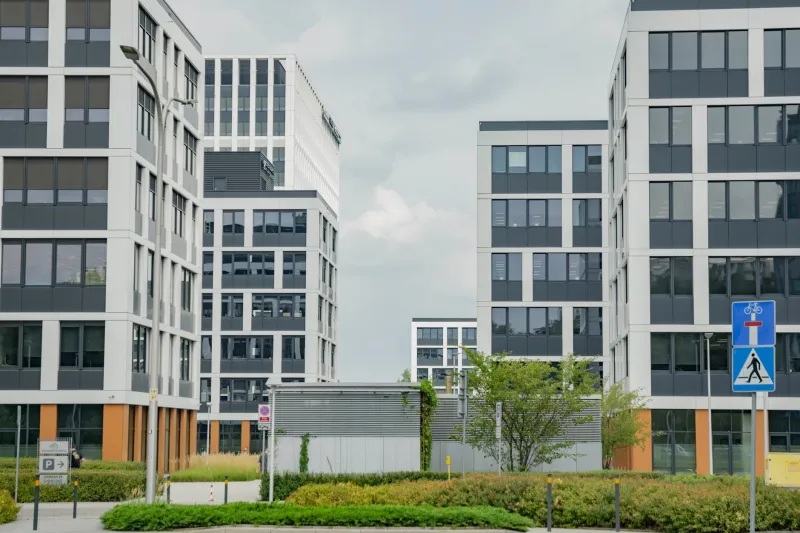
Areas like Nowe Żerniki (a showcase sustainable urban development that earned international attention for its design ambition) and the steadily evolving Fabryczna district around the main railway station represent the newer wave of commercial development. These aren't just shopping centers dropped into suburban voids — they're integrated urban developments that combine retail, residential, office, and public space in ways that create genuine neighborhood character.
The Fabryczna area is particularly worth watching. The redevelopment of Wroclaw's main train station and its surrounding precinct has catalyzed significant commercial investment in what was, not long ago, a somewhat scruffy transitional zone. New retail and F&B concepts have followed the infrastructure investment, and the area's proximity to major transport connections makes it increasingly attractive for both local and international brands seeking accessible, high-footfall locations.
What International Investors Are Actually Seeing
Here's where I'll offer a direct opinion: the international investment community has been slower to recognize Wroclaw's commercial property story than the fundamentals warrant. There's a persistent mental shortcut in global real estate circles that treats Central and Eastern Europe as a monolithic "emerging market" category, when the reality is considerably more nuanced.
Wroclaw specifically benefits from factors that genuinely differentiate it from other Polish and Central European cities. Its proximity to the German border gives it a natural catchment area that extends beyond Poland's domestic consumer market. Its university population — over 130,000 students — creates consistent demand for the kind of food, beverage, and entertainment retail that drives mixed-use development economics. And its history as a multicultural, multi-national city has given it a cultural openness that makes international brands feel genuinely at home here.
For US investors and retailers evaluating European commercial property exposure, Wroclaw offers a risk/return profile that I'd argue is more attractive than many more obviously glamorous Western European alternatives. Yields on commercial property in Wroclaw remain higher than in comparable Western European markets, vacancy rates in well-located retail and logistics assets are tight, and the long-term demand drivers — population, education, international business investment — are all pointing in the right direction.
The Challenges Worth Acknowledging
A balanced take requires acknowledging the real headwinds. Poland's broader retail market has not been immune to the e-commerce disruption that's reshaped retail globally. Traditional shopping center formats have faced the same structural pressures here that they've faced in the US and Western Europe. Several older, poorly differentiated retail centers around Wroclaw have struggled with rising vacancies as consumer spending has migrated online and toward more experiential destinations.
The developers and landlords who are succeeding are those who've moved decisively toward mixed-use formats, invested in placemaking and F&B, and attracted tenants who offer genuine experiences rather than just product transactions. It's the same lesson the US retail industry has been learning, often painfully, for the past decade.
Looking Forward: The Next Chapter
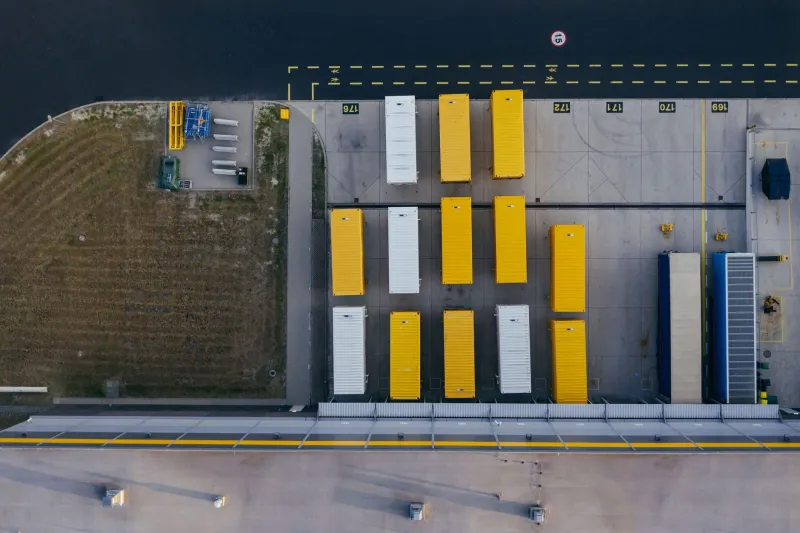
Wroclaw's commercial real estate transformation is genuinely ongoing. New logistics and light industrial development continues to absorb former brownfield land on the city's periphery, driven by the e-commerce fulfillment demand that's reshaping retail real estate globally. City center mixed-use development is becoming more sophisticated, with a new generation of projects that integrate residential, retail, and workspace in ways that would look completely at home in any major US urban market.
The Soviet-era warehouses are mostly gone or repurposed. What's replacing them is something considerably more interesting — a commercial landscape that reflects Wroclaw's growing confidence as an international city with a genuine role to play in European retail and logistics networks.
For anyone watching Central European commercial property, the story here is far from over. In many ways, the most compelling chapters are still being written.