Blueprints of Change: How Wroclaw's Retail Architecture Went From Soviet Gray to Contemporary Gold
If you've ever walked through a major American city and marveled at how a crumbling warehouse district transformed into a buzzing retail hub — think Brooklyn's DUMBO or Chicago's Fulton Market — then Wroclaw's commercial story is going to feel oddly familiar. Except here, the starting point wasn't just industrial neglect. It was decades of centrally planned, architecturally monotonous retail infrastructure inherited from the communist era. And the reinvention? Arguably more dramatic.
Wroclaw today is a city of striking contrasts. Glass-fronted shopping centers stand within walking distance of postwar concrete behemoths. Repurposed factory floors host boutique retailers alongside artisan food stalls. Understanding how the city got from point A to point B isn't just a history lesson — it's a practical roadmap for anyone thinking seriously about commercial real estate investment in Central Europe.
The Domstore Era: When Retail Meant One Big Box
Under Poland's communist government, retail wasn't really about consumer choice — it was about centralized distribution. The physical manifestation of that philosophy was the dom towarowy, or department store, a Soviet-bloc staple that prioritized scale over experience. These weren't charming old-world shops. They were utilitarian concrete slabs, often occupying entire city blocks, designed to funnel shoppers through state-controlled product lines with minimal aesthetic consideration.
Wroclaw had several of these behemoths. The most iconic, Renoma, originally opened in 1930 as a German-era department store called Wertheim, was repurposed under communist rule into exactly the kind of drab state retail outlet that defined the era. It became a symbol of the tension between Wroclaw's pre-war architectural ambitions and its postwar political reality.
Other structures built entirely during the communist period were less elegant to begin with — blocky, poorly lit, and designed with the assumption that scarcity, not competition, would drive foot traffic. By the early 1990s, when Poland began its rapid pivot toward a market economy, these buildings were functionally and aesthetically obsolete almost overnight.
The 1990s Shockwave: When Western Capital Arrived Fast
Poland's transition to a free-market economy after 1989 triggered one of the most rapid retail transformations in European history. Western brands flooded in. Consumer expectations shifted dramatically. And Wroclaw, already positioning itself as a major regional hub, became a primary target for commercial real estate development.
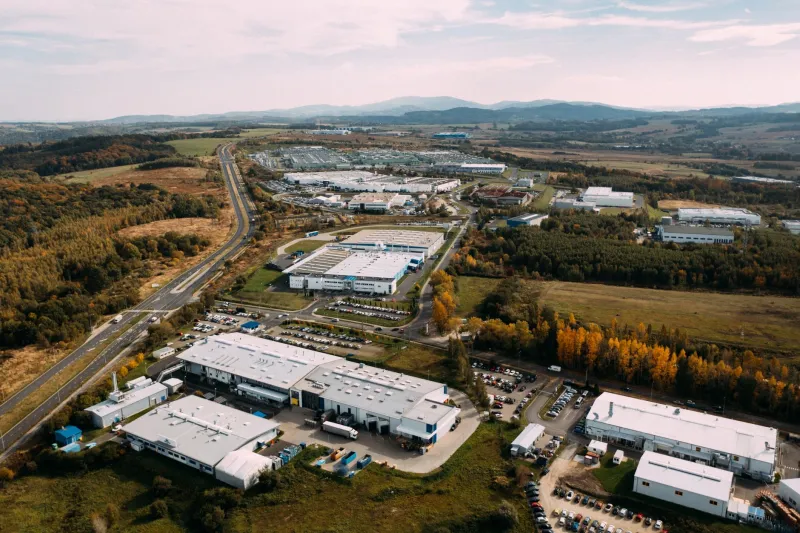
The first wave of modern retail arrived in the form of hypermarkets and strip-style retail parks on the city's periphery — the Polish equivalent of America's big-box suburban sprawl. Think Walmart-style developments dropped onto greenfield sites just outside the city center. They served an immediate consumer demand but did relatively little for urban fabric or architectural quality.
The more interesting story — and the more relevant one for investors — began in the late 1990s and accelerated through the 2000s, when developers started turning their attention back toward the city core.
Renoma's Second Life: Adaptive Reuse Done Right
If you want a single case study that captures Wroclaw's architectural reinvention, look no further than Renoma. After years of post-communist limbo, the building underwent a landmark renovation completed in 2009. The project, led by the architecture firm Koen van Velsen, preserved the building's striking 1930s Art Deco facade while gutting the interior to create a modern, multi-level retail and office complex.
The result was something that would feel at home in any conversation about adaptive reuse in the US. The exterior is a heritage landmark. The interior is fully contemporary — open-plan retail floors, natural light, a mix of international and local tenants. It anchored the revitalization of the surrounding Świdnicka Street corridor and demonstrated to developers across the region that old bones could support new commercial ambitions.
For American investors familiar with projects like Detroit's historic downtown redevelopments or the transformation of Philadelphia's Reading Terminal, Renoma's story hits a recognizable note. The economics of preserving and repurposing a structurally sound historic building — rather than demolishing and rebuilding — often pencil out better than they initially appear, particularly when heritage tourism and retail foot traffic are factored in.
The Mall Boom and Its Architectural Legacy
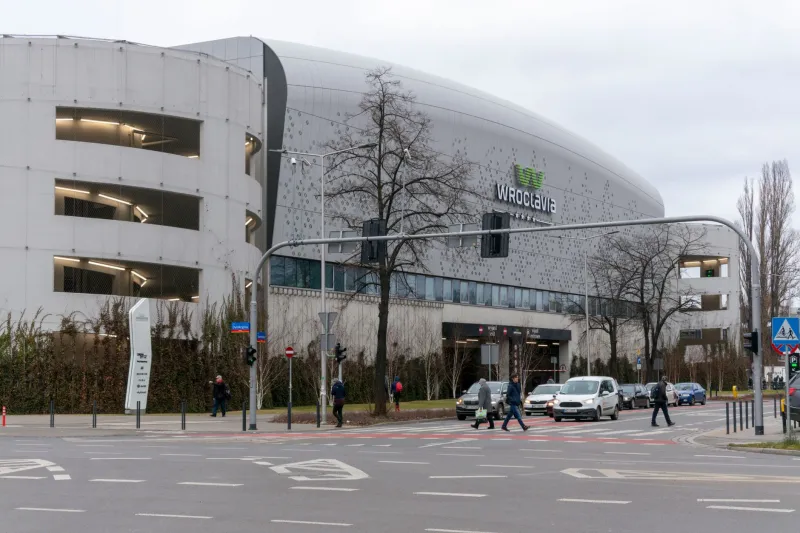
Through the 2000s and into the 2010s, Wroclaw saw the construction of several large-format enclosed shopping malls that fundamentally changed retail patterns across the city. Galeria Dominikańska, Magnolia Park, and Arkady Wrocławskie each brought American-style mall formats to a Polish audience that embraced them enthusiastically.
Architecturally, these developments ranged from competent to genuinely impressive. Magnolia Park, in particular, became notable for its scale and mixed-use ambitions, incorporating not just retail but entertainment, dining, and service tenants in a format that echoed the evolution of American malls toward experiential retail destinations.
What's particularly notable from a real estate perspective is how these malls influenced land values and development patterns in surrounding neighborhoods. Districts that once sat on the commercial periphery found themselves recentered as anchor tenants drew consistent foot traffic and secondary retail followed.
Mixed-Use Development: The Current Chapter
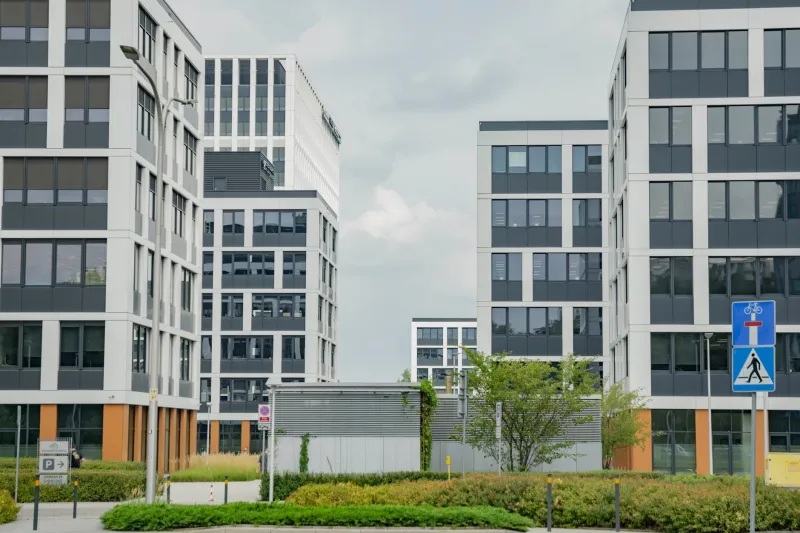
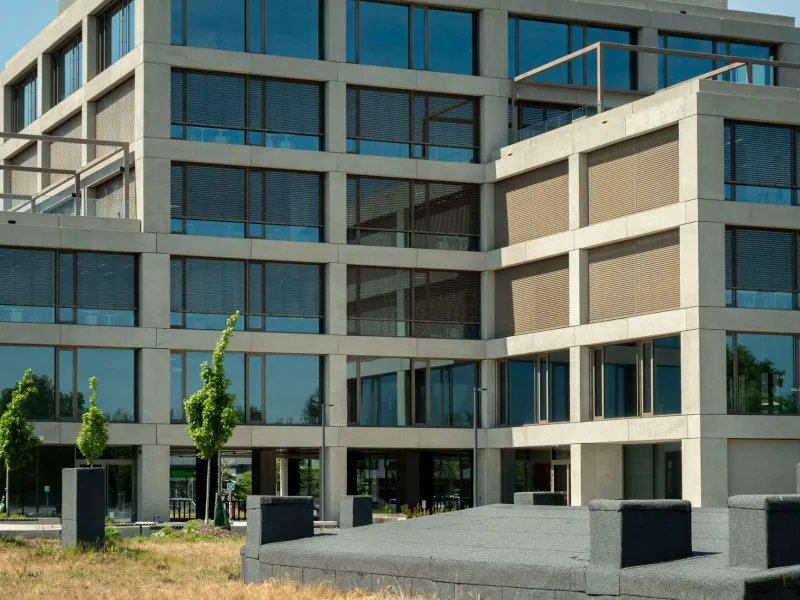
The most recent phase of Wroclaw's commercial evolution mirrors a shift happening in real estate markets across the US — away from single-use retail boxes and toward mixed-use developments that blend shopping, office space, residential units, and public amenities within a single project or district.
Areas like Nowe Żerniki and ongoing redevelopment projects near the Odra River waterfront reflect this approach. Developers are increasingly thinking about commercial space not as standalone product but as one component of a broader urban ecosystem — a philosophy that's been driving premium valuations in American cities from Denver to Nashville for the better part of a decade.
For US investors, this convergence is significant. The playbook that's generated strong returns in American mixed-use redevelopment is increasingly applicable in Wroclaw, with the added advantage of lower entry costs and a market still in an earlier stage of the maturation curve.
What the Architecture Tells Investors
Buildings are economic documents. The progression from communist-era concrete slabs to adaptive reuse landmarks to contemporary mixed-use districts isn't just an aesthetic story — it's a record of where capital has flowed, where consumer behavior has shifted, and where the next round of opportunity is likely to emerge.
Wroclaw still has underutilized postwar structures in transitional neighborhoods. It still has former industrial sites adjacent to high-traffic corridors. It has a growing population of young professionals, a significant expat and international business community, and a city government that has consistently supported commercial redevelopment with planning frameworks and infrastructure investment.
The architectural evolution that took Wroclaw from Soviet-era department stores to one of Central Europe's most dynamic retail environments didn't happen by accident. It happened because investors, developers, and city planners read the signals correctly and moved decisively.
The question worth asking right now is: which chapter is still being written — and who's going to be in it?