Test, Learn, Launch: Why Wroclaw Is Becoming the Secret R&D Lab for American Retail Brands
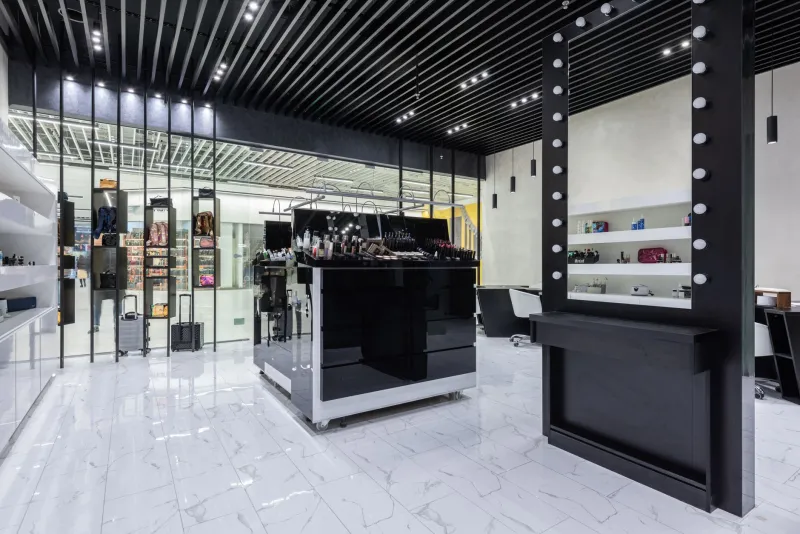
There's a moment every retail executive dreads: the post-mortem meeting after a botched product launch. Millions spent on store buildouts, inventory, and marketing — and the numbers just don't move. It's a story as old as retail itself, and for decades, American brands have accepted it as the cost of doing business.
But a quiet shift is happening. A handful of forward-thinking US retailers are rerouting that risk — not to another American city, but to Wroclaw, Poland.
The Math That Makes Wroclaw a No-Brainer
Let's start with the basics. Commercial lease rates in Wroclaw's prime retail corridors run anywhere from $12 to $28 per square foot annually, depending on location and foot traffic. Compare that to similar-tier retail space in, say, Austin or Denver, where you're easily looking at $45 to $80 per square foot — and that's before build-out costs, which in the US have ballooned post-pandemic.
For a brand testing a 2,000-square-foot concept store, that difference translates to a potential savings of $60,000 to $100,000 per year in rent alone. Add in Poland's comparatively lower labor costs, streamlined EU import channels for manufactured goods, and Wroclaw's growing population of English-speaking, trend-conscious consumers, and the case starts writing itself.
"We were looking at opening a pilot location in Nashville," says one operations director at a mid-size US activewear brand who asked to remain anonymous while their Wroclaw test is ongoing. "The buildout estimate came in at $380,000. We opened in Wroclaw for under $90,000, including all fixtures and local staffing for the first six months. We're treating it as a full concept test, not a charity project."
What Exactly Gets Tested?
The scope of what American brands are piloting in Wroclaw goes well beyond simple product trials. Retailers are using these spaces as full-stack innovation sandboxes.
Merchandising layouts are a big one. How products are arranged, how signage performs, how customers move through a space — all of this gets stress-tested in Wroclaw before a brand commits to a rollout across 50 US locations. The insights are surprisingly transferable, particularly in categories like apparel, home goods, and consumer electronics accessories.
Price sensitivity testing is another major use case. Wroclaw's consumer base — a blend of university students, young professionals, and a growing expat community — mirrors certain US urban demographics closely enough that brands are using it as a proxy market. One home décor brand reportedly tested three different pricing tiers for a new product line over a four-month period in Wroclaw before settling on a structure for their US launch.
Customer experience concepts are perhaps the most exciting frontier. Think in-store digital integrations, loyalty program onboarding flows, staff-to-customer interaction scripts, and even sensory elements like scent and lighting. These are expensive to iterate on in the US. In Wroclaw, a brand can run two or three versions of the same concept in the same quarter without breaking the budget.
Wroclaw's Underrated Consumer Profile
Skeptics might ask: does testing in Poland actually tell you anything useful about American shoppers? It's a fair question, and the honest answer is — more than you'd expect.
Wroclaw isn't Warsaw. It has a distinct personality: a major university city with over 130,000 students, a robust tech and business process outsourcing sector, and a retail culture that's been shaped by both Western European influence and a deeply local sense of identity. Consumers here are discerning. They respond to quality, storytelling, and brand experience in ways that rhyme with US urban consumer behavior more than most people realize.
"The customer in Wroclaw is not a passive shopper," says Marta Kowalczyk, a retail consultant based in the city who has worked with several international brands on market entry strategies. "They want to understand why a brand exists. They push back on bad design. They are, in many ways, a harder audience than a typical American mall customer — and that's exactly why international brands find the feedback so valuable."
The Failure Rate Advantage
Here's the stat that really gets retail executives leaning forward: domestic US pilot programs fail to convert into full rollouts at a rate of roughly 40 to 50 percent, according to internal benchmarks shared by several mid-market retail consultancies. The average cost of a failed US pilot? Somewhere between $500,000 and $1.5 million when you factor in lease breakage, inventory write-downs, and staff severance.
Brands piloting in Wroclaw report that even when a concept doesn't work — when the product misses, the layout confuses, or the pricing model falls flat — the total cost of that failure sits closer to $80,000 to $150,000. That's not nothing, but it's a fundamentally different conversation with a CFO.
And critically, the learnings from a Wroclaw failure aren't wasted. They feed directly into a revised US concept. Several brands have reported running what they call a "Wroclaw iteration" before a second attempt at a US pilot — essentially using the Polish location as a reset button that costs a fraction of starting over domestically.
Navigating the Practicalities
It's worth being honest about the friction involved. Setting up a retail operation in Poland as a US company requires navigating EU business registration, VAT compliance, employment law, and import logistics. None of this is insurmountable — Wroclaw has a growing ecosystem of local attorneys, logistics firms, and commercial real estate brokers who specialize in exactly this kind of international setup — but it does require upfront investment in local expertise.
Most brands working this strategy lean on a local operator or franchise partner to handle day-to-day management, which keeps the US team focused on what they actually want to learn rather than getting lost in administrative compliance. Commercial spaces in developments like Magnolia Park, Pasaż Grunwaldzki, and various newer mixed-use projects along the Odra corridor offer the kind of foot traffic and retail infrastructure that makes a meaningful test possible.
The Bigger Picture
What's happening in Wroclaw is part of a broader rethinking of where and how American brands take risks. The old model — launch big, spend big, hope for the best — is giving way to something leaner and smarter. International markets, particularly in Central Europe, are starting to function as genuine strategic assets rather than afterthoughts.
For brands willing to do the homework, Wroclaw offers a rare combination: low enough costs to experiment freely, sophisticated enough consumers to generate real signal, and enough commercial infrastructure to run a credible test. That's not a small thing in an era when getting a US launch wrong can set a brand back by years.
The retailers who figure this out first aren't just saving money. They're buying something more valuable — the confidence to go big when it actually counts.